
Most extension colour mismatches don’t begin with the wrong shade. They begin with the wrong question.
The question people ask is “what colour is my hair?” The answer comes back “dark blonde” or “medium brown,” and then they order the swatch wearing those same words on its label. The question that actually predicts whether extensions vanish into your hair is narrower: where will the hair sit, how does that specific hair reflect light, and what undertone runs underneath it?
This is a big, unforgiving market to get this wrong in. Grand View Research estimated the global hair wigs and extensions market at $15.22 billion in 2025, with a projected climb to $31.13 billion by 2033. A number that size is really a measure of how many people are walking around with a seam nobody was supposed to see.
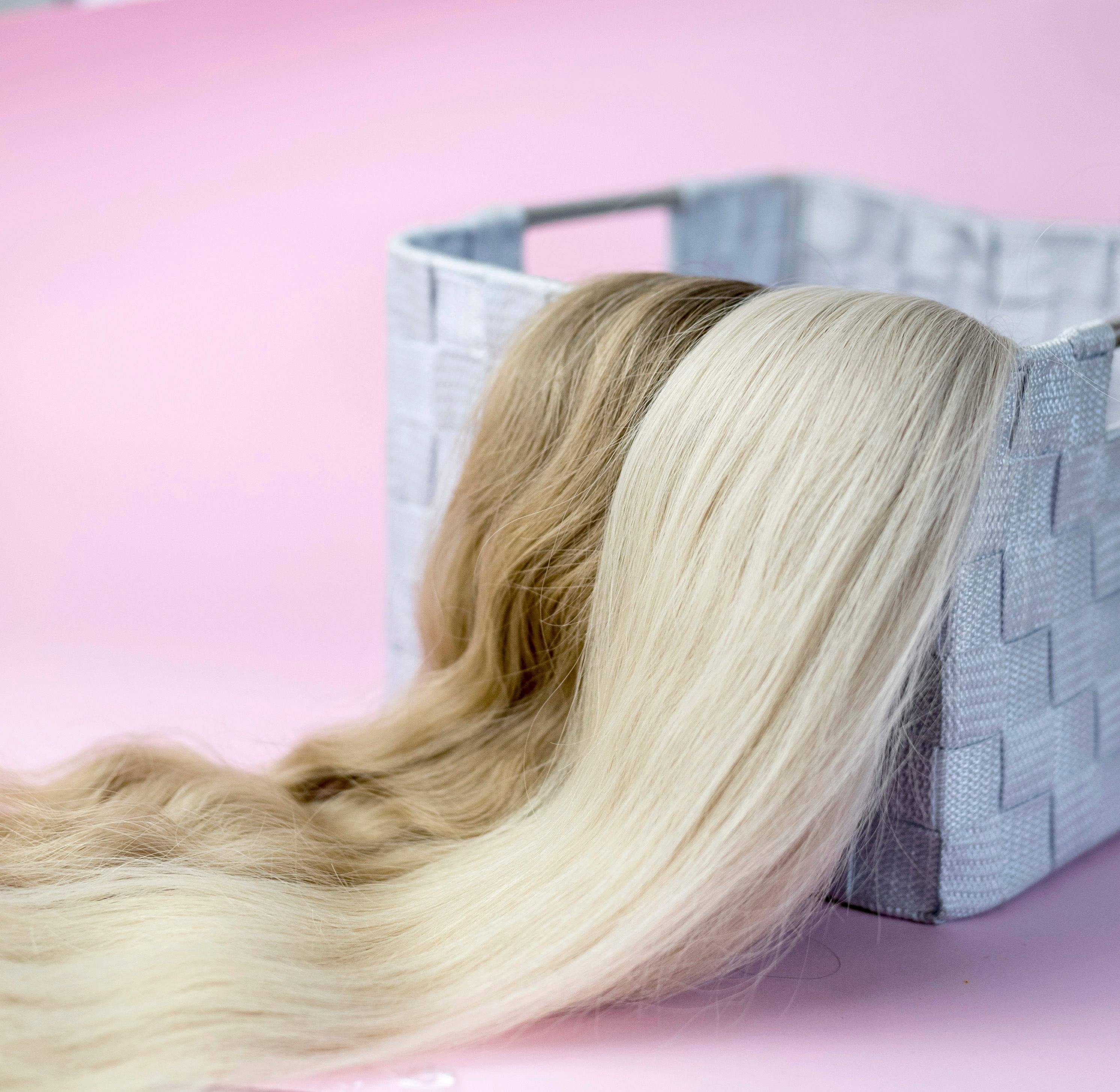
Why “medium brown” is a useless starting point
Colourists don’t describe hair with names. They describe it with two numbers that do all the work: level and undertone.
Level is depth on a 1-to-10 scale, where 1 is the deepest black and 10 is the palest bleached blonde. Most natural hair lives between 4 and 7. Undertone is the hue sitting underneath the surface: warm (gold, copper, honey), cool (ash, violet, grey), or neutral. Two people can both be a level 6 brown and still need completely different extension shades, because a level 6 warm brown and a level 6 cool brown look like different colours standing side by side.
My read, having read a lot of stylist protocols while putting this together, is that undertone causes most of the mismatches you can spot from across a room-more than depth does. Cooling a warm head with an ashy extension, or warming a cool one with a golden shade, produces a muddy, disconnected contrast that no amount of curling or texturising fixes. Depth errors you can sometimes hide with styling. Undertone errors keep announcing themselves in daylight.
Match the blend zone, not your roots
Nearly every guide tells you to match your mid-lengths and ends rather than your roots, and that advice is correct. Extensions attach below the scalp, so the part of your hair that actually shows is the mid-shaft to the perimeter. Your roots are also naturally a shade or two darker, which is exactly what pulls people into ordering a shade that turns out heavy and flat where the hair is finally visible.
Here’s the part that gets skipped, though: matching only your ends is its own trap. If your ends are sun-faded or carry old lightener, matching to those alone pushes the whole install two levels too light, and the mismatch just relocates upward to the seam where the tapes or bonds sit. The target is the blend zone-the mids through the seam-then you handle the ends and the roots separately.
The test that catches most mismatches: get out of the bathroom
This is the one I’d put above everything else. One extension specialist’s protocol calls it the three-window check, and the reasoning holds up: salon overheads usually run around 3000K (warm tungsten) or 4000K (fluorescent, often with a green bias), and both shift how warm or cool a swatch reads. A match confirmed in one light can fail in another-the phenomenon colour scientists call metamerism, where two samples that reflect light identically under one source diverge under a different one.
Hair makes this worse than most materials, because every strand contains red-yellow pheomelanin alongside the darker eumelanin that dominates what you see. Full-spectrum daylight reaches those warmer pigments and lights them up; dim or red-heavy indoor light masks them. That’s why a brunette who reads flat neutral at her desk can look distinctly copper the moment she steps outside.
| Light source | Typical colour temperature | What it does to your read |
|---|---|---|
| Tungsten / halogen (many salon overheads) | ~3000K | Pushes hair toward red and gold; a cool blonde can look warmer than it is |
| Fluorescent (offices, some salons) | ~4000K, often green-biased | Mutes warmth and can make ash tones read grey and flat |
| Natural daylight (window or outdoors) | ~5500K | The honest neutral reading; exposes undertone conflict fastest |
| Phone flash | Cool, 6000K+ | Adds a blue cast and flattens dimension |
Colour temperatures from Alma Hair Extensions’ published stylist protocol and standard colour-science ranges; retrieved 2026.
A 2023 study in the journal Acta Psychologica (47 participants, 246 dyed hair samples) found that people don’t judge hair colour against an absolute reference at all-they anchor it to the context of “hair,” pulling it toward a remembered brown. In other words, the eye quietly corrects for the room it’s standing in, which is precisely why your own eyes are the least reliable tool in the salon until you take them outside. The study’s findings on hair colour perception are worth reading if you like your beauty advice with a methods section.
Warm, cool, or neutral? Three ways to tell
You need to establish your undertone before you look at a single swatch, and you need to do it in daylight. Three quick checks:
- The white-paper test. Hold a sheet of plain white paper next to your hair outdoors. If your hair throws gold or amber against it, you’re warm. If it looks flat or slightly grey, you’re cool. If you genuinely can’t decide, you’re probably neutral.
- The vein test. Greenish veins at the wrist lean warm; bluish veins lean cool; a mix suggests neutral.
- The reflection test. Look at the last few inches of your hair, not your roots, in indirect daylight. Ends that catch a red or copper glow are carrying warm undertone; ends that look smoky or muted are cool.
One caution on common shade codes: numbers vary wildly between brands. A “6” from one manufacturer can sit warmer or cooler than a “6” from another. The codes below are a rough map of the most widely used labels, not a universal standard-which is another argument for borrowing a physical ring rather than ordering from a chart on a screen.
| Code | Level | Undertone | Typical description |
|---|---|---|---|
| 1B | 1–2 | Neutral | Off-black |
| 2 | 2–3 | Cool | Darkest brown |
| 4 | 4 | Warm | Chocolate brown |
| 6 | 6 | Neutral | Light brown |
| 18 | 8 | Cool | Ash blonde |
| 22 | 9 | Warm | Golden blonde |
| 60 | 10 | Cool | Platinum |
Common industry shade codes; note that numbering systems are not standardised across brands.
Build the match in two or three shades, not one
Natural hair is almost never one flat tone from seam to tip, which is the quiet reason a technically correct single shade can still look bought. The professional standard is to blend two or three shades so the extension echoes the dimension your own hair already has.
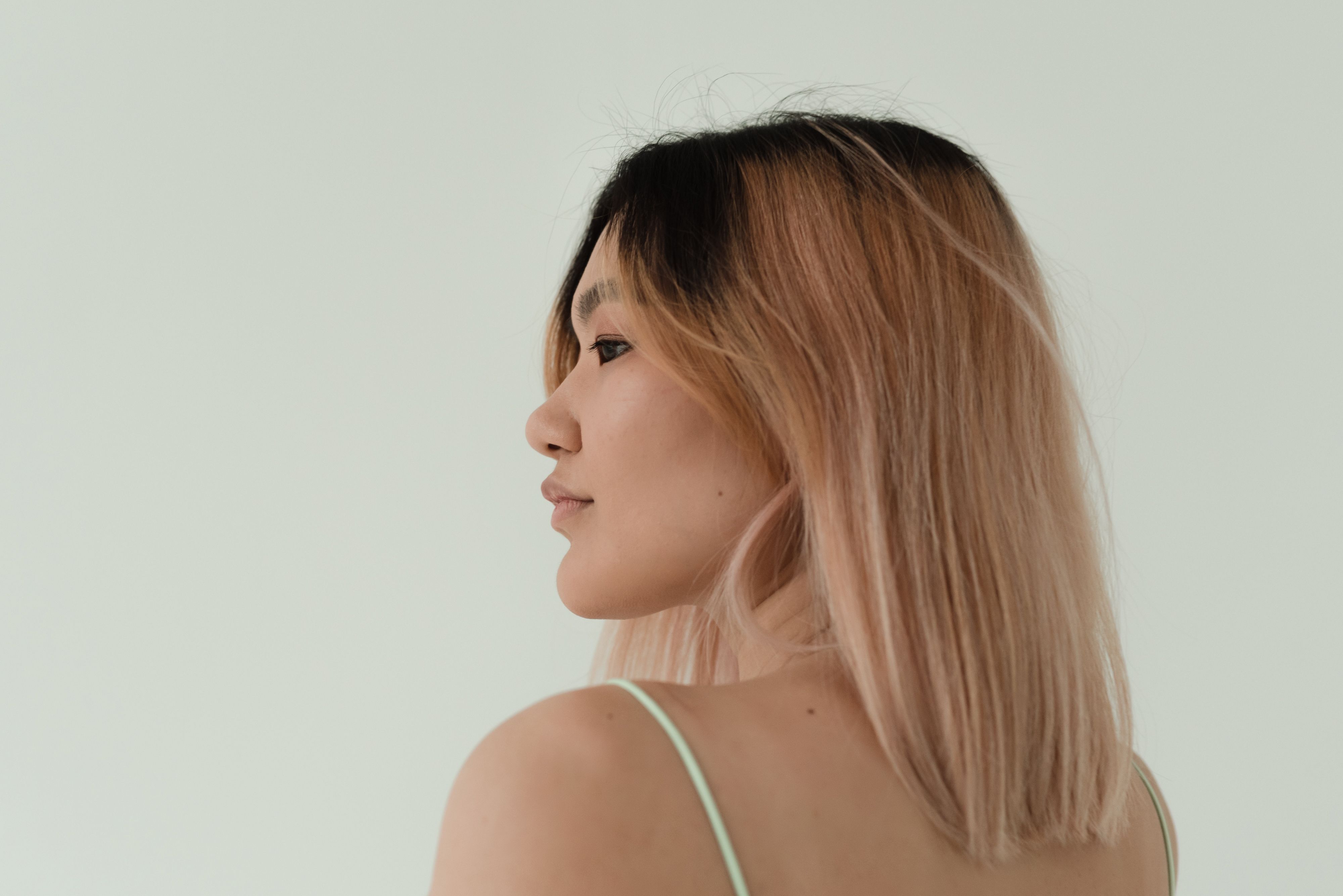
That doesn’t mean choosing at random. Start with the dominant shade at your mids, then add one slightly lighter option to break up the row and one shade that nudges the undertone in the right direction. If you wear balayage or ombré, match both ends of the gradient-the root tone and the lightest end-rather than splitting the difference with one middle shade that matches neither.
Method changes this too. A compact row of tape hair extensions reads denser and more solid than the same shade installed as fine individual bonds, so a single flat shade is riskier on tape than on a method that scatters hair and lets light through. For tape, alternating a slightly deeper neutral with a brighter piece through the lower rows keeps the panel from reading as one blocky band.
The advice I’d push back on
You’ll read, in a dozen places, that when you’re between two shades you should “go lighter.” I think that rule gets repeated more than it gets understood.
It holds when your ends are genuinely lighter than your mids, because too-dark hair against a lighter canvas creates the harsh line everyone is trying to avoid. It does not hold universally. If your ends are the darkest part of your hair, going a shade lighter just moves the error to the seam. The real deciding factor between two close shades is almost always undertone, not level-send both to a colourist and ask which one matches your warmth, not which one is lighter.
And a flag on the numbers you’ll see quoted. Several extension brands publish a “95% success rate” for their five-step matching method. I went looking for the methodology behind that figure and couldn’t find one anywhere-it appears only in the brands’ own marketing copy, with no sample, no test conditions, and no independent audit. Treat it as a sales claim, not a finding. The honest position is that a systematic process should beat guesswork, but nobody outside the marketing department has measured by how much.
There’s a real disagreement here worth naming. Some traditionalists argue you should match one exact base shade and stop there, because blending multiple colours muddies the result. They have a point for clients who wear a true single-process colour-for them, the cleanest match often is one solid shade. But the moment your hair has highlights, lowlights, or any grow-out, a single flat shade reads artificial next to your own variation. My position: build the match, don’t hunt for it.
The consultation, in order
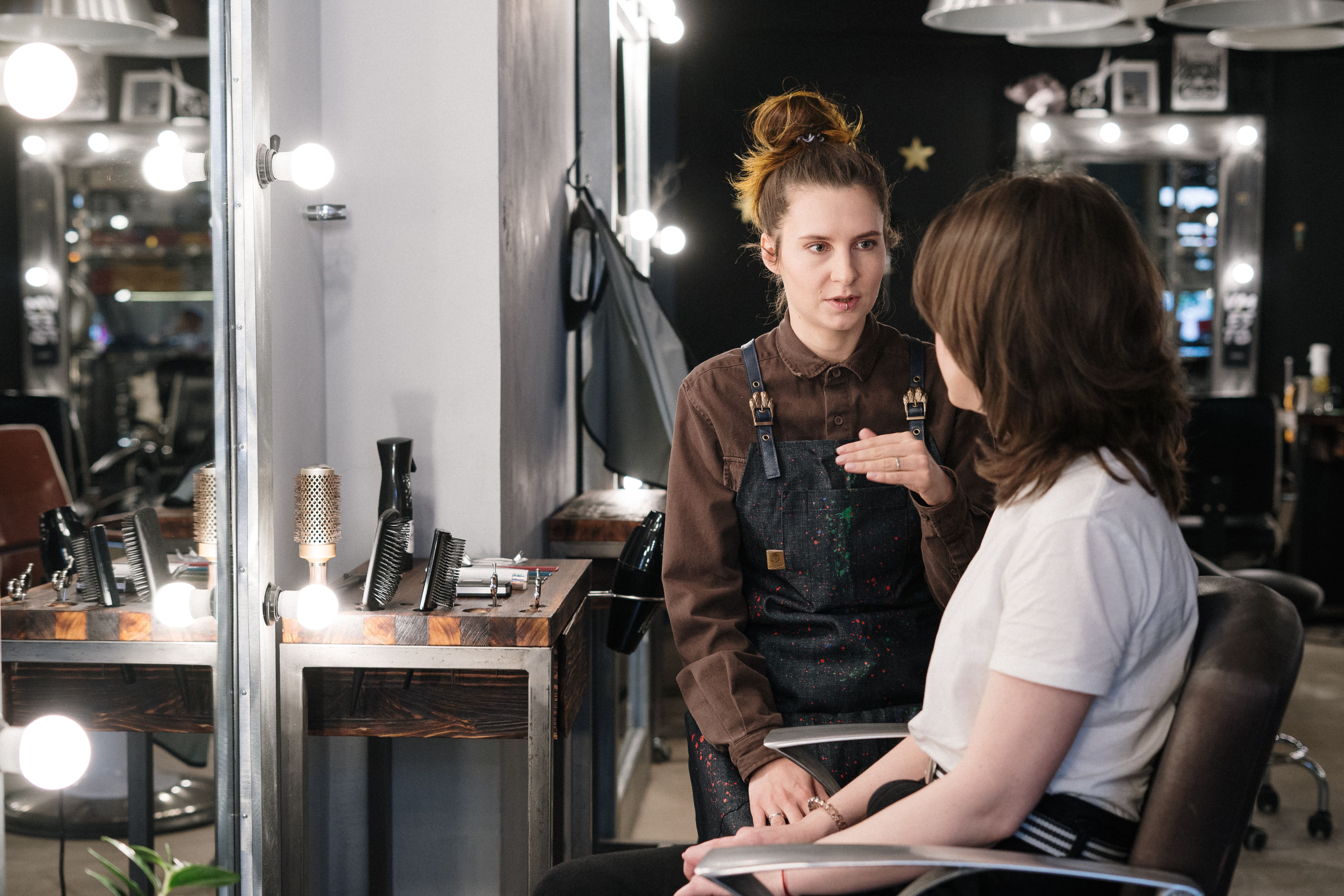
If you’re doing this with a professional, here’s the sequence that gives you the best chance of a first-time match:
- Wash and dry your hair as you normally wear it. Wet hair reads significantly darker, and product build-up shifts the colour.
- Assess in daylight. Near a window or outside, ideally indirect light, never under a ring light or warm overhead.
- Read the mids and seam first, then the ends, then the front hairline. Resist anchoring to the roots.
- Fan the swatches. Compare neighbouring shades together, not one in isolation-a shade that looks right alone can read too warm beside its neighbours.
- Check from a couple of feet back. Some mismatches look fine at six inches and obvious at conversation distance.
- Confirm in more than one light source, and photograph the comparison. Cameras catch reflection problems your eye misses mid-conversation.
Here’s a decision worth making before you order. You can match your ends exactly and accept a visible transition at the seam, or match your mids and have a colourist tone your ends down to meet them. The second option costs more and looks better; the first costs nothing and is sometimes good enough. Which you’d take depends on how often you wear your hair up-and on whether anyone but you ever sees the seam.
Frequently asked questions
Do I match extensions to my roots or my ends?
Neither, on its own. Match the blend zone-your mid-lengths through the seam where the extensions attach-then adjust the ends and roots around it. Matching to roots produces hair that’s too dark where it shows; matching to ends alone can push the whole install too light.
What if I’m between two shades?
Let undertone decide, not depth. Hold both swatches in daylight against your mids and see which one tracks your warmth. If they’re truly identical in undertone, a slightly lighter option usually blends more forgivingly than a darker one-but only if your ends support it.
Can I dye or tone extensions to match?
Only if they’re real human hair, and only with a professional. A deposit-only gloss or toner can refine a shade by half a level or shift its warmth. Synthetic fibre won’t take dye at all, and at-home colour on human extensions is a fast route to ruining the cuticle. If the shade is materially wrong in depth, replacement is the cleaner fix.
Why do my extensions look fine indoors but wrong outside?
Metamerism, plus pheomelanin. Indoor light often lacks the spectral range to reveal the warmer pigments in your natural hair, and warm bulbs flatter the extension too. Full-spectrum daylight exposes the difference. This is why a daylight check is non-negotiable.
Does my hair texture affect the match?
Yes. Fine, silky extensions against coarser, more matte natural hair will read as a different colour even when the shade code matches, because the two surfaces reflect light differently. Match texture and shine, not just colour.
How do I match grey or white hair?
Grey is the hardest category because it isn’t one colour-bright silver, salt-and-pepper, and warm-toned grey all need different approaches. A single flat swatch tends to read denser and more uniform than natural grey. Blended or multi-tone pieces usually disappear far better than one dominant shade.
How this article was put together
I based the matching logic on published stylist protocols and brand colour guides retrieved in 2026, the colour-perception research in Acta Psychologica (2023), and Grand View Research’s 2025 market estimate. Where brands claimed a success rate, I checked for a methodology and found none, so I’ve said so rather than repeating the figure as fact. What I could not verify: whether any of the “99% accurate” remote matching services have ever been independently tested-none publish results. Colour temperatures and shade codes are industry conventions, not standards, so recheck them against your chosen brand before ordering.
Colour matching isn’t a talent. It’s a checklist: read the blend zone, establish the undertone, get out of the artificial light, and accept that two shades usually beat one. Do those four things and the extensions stop being a decision people can see.